
COLM HANLEY (AIM IRELAND) TALKS ABOUT INDEPENDENT MUSIC AS ESSENTIAL CULTURAL AND ECONOMIC INFRASTRUCTURE, OWNERSHIP AND COMMUNITY, AND WHY GRASSROOTS PIPELINES NEED TO BE PROTECTED
Brussels, 30 October 2026
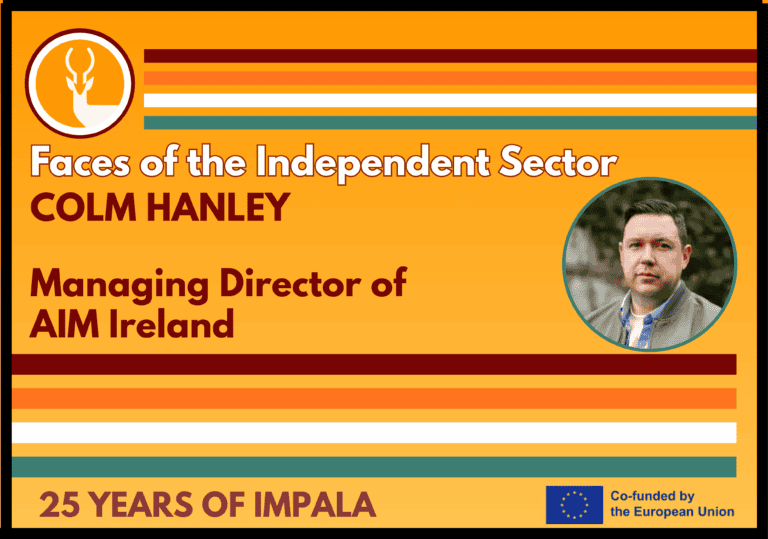
As part of IMPALA’s Faces of the Independent Sector storytelling series, co-funded by the European Union, and celebrating our 25th anniversary, we are sharing the tenth interview in the series with Colm Hanley, Managing Director of AIM Ireland. This instalment comes following IMPALA’s meetings and the second European Independent Music Summit in Dublin early this month, which coincided with Ireland Music Week, and spotlights the work of our hosts, AIM Ireland, the Association of Independent Music.
In this latest edition, Colm explains how for him being independent means ownership, resilience and autonomy over your own rights and career. He also highlights the strength of the independent community being one of the most open and supportive in the industry.
Colm outlines the challenges the independent sector faces, including rising costs, as well as AI making discoverability more difficult than ever. He calls for independent music to be treated as essential cultural and economic infrastructure, with proper investment, using the example of tax incentives for film, TV and games that has been seen in Ireland.
He also shares AIM Ireland’s upcoming projects, including its first “30 Under 30” list, the “Future Forecast” event and the third edition of “AIM Connects”.
What do you do in the music sector?
“I am the Managing Director of AIM Ireland, the Association of Independent Music. I also manage three independent artists and run re|set, a music, sponsorship & event consultancy.”
How did you start working in the music sector?
“I was working in radio presenting and producing a local music show when I met Roger Quail from Rubyworks Records who invited me to intern at the label. I spent 6 months there before being offered a job in MCD Productions, who were based in the same building at the time, and that was the beginning of my career in music. 20 years in, I’ve worked across live, management, labels and brand partnerships, always with a grounding in independent music.”
What does being independent mean to you?
“Being independent means ownership. This industry, like many other creative sectors, is changing rapidly and having the autonomy to manage your own rights and career is a huge advantage. Community is also a major part of it. Independent may feel like its just you, but as a sector it’s one of the most open and welcoming you’ll find for support and sharing of ideas.”
What are the biggest opportunities for the independent sector today?
“The tools have never been more available to artists and their teams. Direct access to audiences and owning your own data and managing your own community opens a huge opportunity to reach fans anywhere without the barriers of a gatekeeper.
From a local Irish perspective, we are having a huge moment again both domestically and internationally with our acts, many of which are independents, so now is the time to really grasp that, nurture and grow it.”
What are the biggest challenges for the independent sector today?
“Most independents run on tight margins and the cost of everything is rising. Venues are under pressure, tour margins are tight and AI is continuing to infiltrate the algorithms, making discoverability more challenging than ever.
The support systems that we do have need to keep pace with these changes. I’m a firm believer that good ideas will always find a way to come to life, but they can stall if the support is not there. If we can correct that, the opportunity for growth is huge.”
What change would you like to see in the music industry?
“Independent music needs to be seen and treated as essential cultural and economic infrastructure and receive a fairer share of the value it creates. The grassroots venue and live pipeline needs to be protected and treated as a foundation and not an afterthought. My background is in live so I will always have a major love for getting to see bands making their way from small rooms to theatres, arenas and festivals. It’s a special and unmatched part of this whole business. Every major festival headliner starts in venues like this, if we don’t protect it there will come a time when that dries up and where do we go?
In Ireland, I’d like to see proper investment in the sector like how the Film, TV and Games industries have successfully demonstrated through the tax incentives they have received. Independent music is already showing what we can do, imagine if the support and infrastructure were behind us.”
What tips would you give to others starting out in the independent sector?
“Just go for it. Leave nothing on the table and back yourself in whatever area you want to work in. There is plenty of opportunity and sometimes it means creating it for yourself so don’t shy away, get into rooms, do your research on others in the industry and reach out to them for a call or a meeting. Build your network and the rest will follow.
Also, engage with your local TA, organisations like AIM Ireland are great for putting you in those rooms and we’re always looking for new people with fresh ideas to highlight the sector.
Be brave, if you have a mad idea in your head find a way to do it because it might just be the thing that gets your artist out there. Some of the best people I know in this industry are exceptional at not only conceiving a crazy idea but being able to make it happen.”
Describe the independent sector in one word.
“Resilient! We’ll keep going, keep building and always find a way.”
What are the key projects or priorities you will be working on over the next 12 months that you would like to highlight?
“AIM Ireland has a number of exciting projects in the works for 2027 and beyond.
Shortly, we’ll launch our first ‘30 Under 30’ list highlighting the next generation of young Irish professionals working in music. That will lead us into January when we will host our first in-person event of 2027 for our members. ‘Future Forecast’ will look at what key trends and topics will shape the independent sector next year.
Our annual conference AIM Connects is back in April for its third year with plans to expand on our previous two years. And in early 2027 we will be moving AIM Ireland into our first premises in Dublin 8, a short walk from the city centre. This is a really exciting long term project for the organisation which will provide new amenities for our members and the local area – more details on this to be revealed in the new year.
We’ll also continue to press, and step up our activity, for better infrastructure and supports for the sector at government level.”
What’s on your playlist?
- Amble – The Swell
- Jamie McIntyre – Reason I Try
- The Gaslight Anthem – The Patient Ferris Wheel
- Sam Fender – Hypersonic Missiles
- Bleachers – Rollercoaster
- Oasis – The Masterplan
- Mic Christopher – Listen Girl
- Laura Elizabeth Hughes – The Fires
- Ava McKechnie – Daydreaming
Babyrat – Roses
Listen to Colm’s full playlist on Spotify.
Check out previous editions of the series with Merlin’s Shrina Patel, ANMIP’s Kristiyana Georgieva, Glitch Records’ Pavle Eftimovski, STOMP’s Luciano Winter, FÉLIN’s Céline Lepage, !K7’s Andrea Lacroix, Warp Records’ Caroline Hansen, Everlasting Records’ Mark Kitcatt and Best Music’s Mariana Voronina.
About Faces of the Independent Sector
As part of IMPALA’s 25th anniversary and #WhyIndependentsMatter programme, the Faces of the Independent Sector interviews spotlight the creativity and the diversity of European independent music companies. The series shares the stories from the perspectives of owners, employees, and other key players. By highlighting their successes, struggles, and day-to-day realities, the campaign reveals the sector’s leaders and the stories that make it thrive. This project is co-funded by the European Union.
About IMPALA
IMPALA was established in 2000 and now represents over 6000 independent music companies in Europe. 99% of Europe’s music companies are small, micro and medium businesses and self-releasing artists. Known as the independents, they are world leaders in terms of innovation and discovering new music and artists – they produce more than 80% of all new releases and account for 80% of the sector’s jobs. IMPALA’s mission is to grow the independent music sector sustainably, return more value to artists, promote diversity and entrepreneurship, improve political access, inspire change, and increase access to finance. IMPALA works on a range of key issues for its members and started a new co-funded work programme as an EU cultural network in 2025. IMPALA runs various award schemes and has a programme aimed at businesses who want to develop a strategic relationship with the European independent sector – Friends of IMPALA. This year we are celebrating our 25th anniversary programme #WhyIndependentsMatter with a series of interviews Faces of the Independent Sector, as well as reports and other features, see more here.
